The Impact of Artificial Intelligence on SEO and Online Visibility

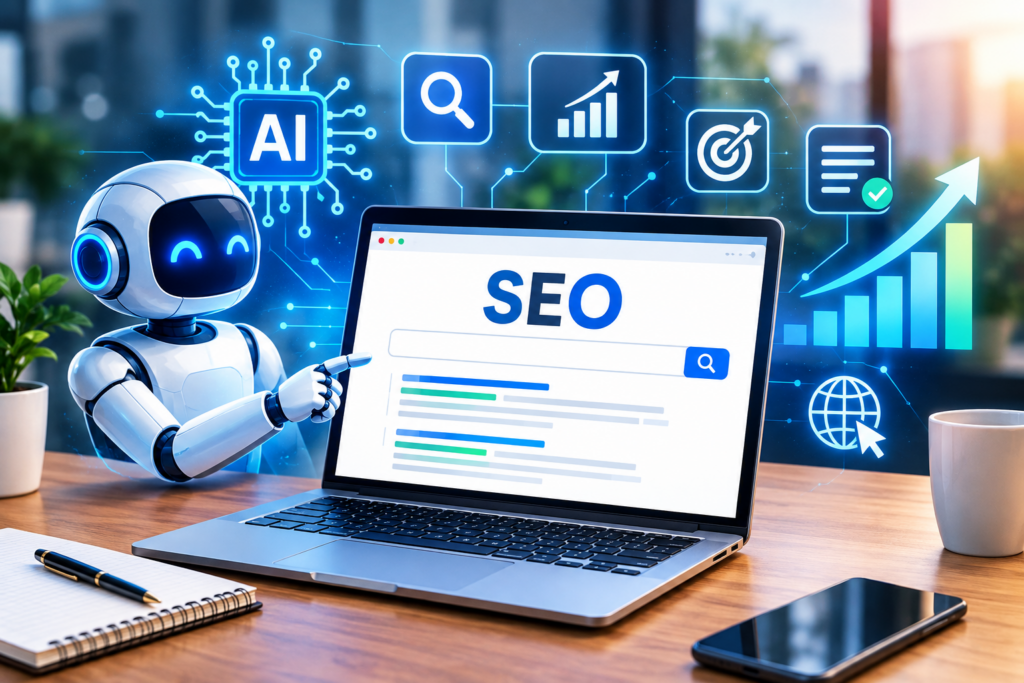
As the internet continues to grow and evolve, AI has become a game-changer, especially in the field of SEO. In an era where businesses and content creators are seeking to boost their online presence, the impact of AI on SEO strategies is becoming more and more significant. The role of AI in SEO strategies is increasingly vital as businesses and content creators aim to enhance their online visibility. This article delves into how AI transforms website and brand visibility online, particularly in the realm of SEO.
This is the Era of Artificial Intelligence in SEO
AI is the technology that involves machines and algorithms that do things that normally need to be done by human intelligence. AI tools and techniques are transforming the world of SEO. Advancements in AI have led to more complex, data-driven, and personalized approaches to SEO. AI is making it possible to craft more intricate, data-backed, and personal SEO strategies, ranging from natural language processing (NLP) to machine learning (ML).
AI has been incorporated into the processes of search engines like Google, such as RankBrain and BERT. These AI technologies enhance the user search intent and understanding to deliver more precise and relevant results, addressing the complexities of user language. These AI systems contribute to improving search engines’ understanding of user intent, context, and nuances, resulting in more accurate and relevant search results. Therefore, SEO experts need to adjust their practices to align with these AI-powered transformations.
AI-Driven Keyword Research and Content Optimization
In the past, keyword research meant finding keywords that have high traffic potential and creating content around them. With the advent of AI tools, however, a more sophisticated method is possible, which involves understanding user intent, semantic relevance, and contextual signals. For example, AI tools such as SEMrush, Ahrefs, and Clearscope can help you understand which keywords are relevant to your website, identify content gaps, and find trending topics.
Content optimization has also been revolutionized by AI. Yoast and MarketMuse are some tools that use NLP to assess the quality, readability, and keyword usage of content. They propose suggestions that match what is considered valuable to rank by AI systems. This way, no content is created only to be filled with keywords, but rather with content relevance that users will appreciate.
Advanced personalization and user experience
By leveraging AI, websites can customize their content according to the user’s actions, tastes, and search trends. Personalized experiences boost engagement, lower bounce rate and drive conversions that positively affect SEO rankings. AI tools like recommendation engines, chatbots, and personalization of content provide customized information to visitors, which can help build loyalty and return visits.
Furthermore, AI can search through interactions to discover trends and fine-tune web site structure, navigation, and content format. These enhancements bring benefit to the user experience (UX), and that’s one of the most important metrics that search algorithms seek.
Voice Search Optimization
With the rise of voice-activated devices such as Alexa, Google Assistant, and Siri, there has been a significant increase in voice search queries. Voice search optimization is a crucial aspect of contemporary SEO, given the importance of AI in comprehending natural language and conversational queries.
Long-tail keywords, natural language phrases, and local search intent are key aspects of optimizing for voice search. Content types that specifically answer questions in a concise and clear manner are more likely to show in voice search results. Voice search will continue to play a major role in online visibility as AI is becoming better and better at understanding speech and context.
AI and Content Creation
AI is also being utilised for content generation, assisting marketers in creating quality articles, product descriptions, and social media posts. These platforms, such as GPT-4, can produce human-like text, helping to generate SEO-friendly content that saves time and resources.
While AI can be helpful in generating content, authenticity, expertise, and originality are still important. Even with AI-generated content, it’s crucial to have human oversight, as search engines value content that is valuable and well-researched.
AI for Technical SEO and Site Audits
Technical SEO includes optimizing website architecture, speed, mobile-friendliness, and crawlability. AI tools are more efficient in performing full-site audits, detecting problems and proposing solutions than manual ones.
AI can, for example, sort through volumes of data to find broken links, duplicated content, or slow loading pages. It can also anticipate problems with SEO that could affect rankings, allowing for optimization in advance.
Challenges and Ethical Considerations are Explored
While AI offers numerous advantages for SEO, it also comes with its fair share of challenges. If not properly used, AI tools could produce generic or keyword-heavy content. Moreover, search engines are regularly updating their algorithms to identify and punish any tricks that utilize the capabilities of AI.
Ethically, content creators need to be transparent and honest, ensuring that their content is not deceptive or goes against the guidelines set by search engines. Balancing AI automation and human oversight is crucial for long-term SEO success.
Future Outlook
As AI technologies continue to evolve, the future of their role in SEO is bright, with increased personalization of search results, enhanced voice and visual search features, and the automation of more intricate optimization processes all in the offing. With the increasing sophistication of AI, it is crucial for SEO professionals to be informed and flexible.
Furthermore, AI is set to intersect with other new technologies, such as augmented reality (AR) and virtual reality (VR), and 5G, creating fresh opportunities for online visibility and user engagement.
Conclusion
AI has transformed SEO and online visibility, making it smarter, more customized, and more efficient. Whether it’s generating better keyword ideas, drafting content, improving the user experience, or conducting technical audits, AI tools are changing the way websites attract and keep visitors.
In this AI era, businesses and SEO experts must actively engage with these technologies, balancing automation with human expertise to achieve lasting success. To truly succeed in this AI-powered era, businesses and SEO professionals should adopt these technologies responsibly, leveraging automation and human insight. Keeping up with the latest developments in AI and grasping their significance will play a key role in ensuring a competitive online presence and long-term success.